Danger vs warning vs caution signs: which one does your hazard need?
Danger vs warning vs caution signs explained: what each signal word means under ANSI Z535, how CSA Z321 fits in, and how to pick the right one for a hazard.
Walk into any electrical room or plant floor and you'll see the same three words at the top of most signs: DANGER, WARNING, CAUTION. They aren't interchangeable. Each one tells the reader how bad the hazard is and how likely it is to hurt them. Pick the wrong one and the sign either gets ignored or cries wolf.
This guide covers what each signal word means, where NOTICE and safety instruction signs fit, how the Canadian standard CSA Z321 relates to the American ANSI Z535 system, and how to choose the right word for the hazard in front of you.
The signal word system in one minute
The signal word system comes from ANSI Z535.2, the American standard for environmental and facility safety signs. It sorts hazards by two things: how severe the injury could be, and how likely it is to happen if nobody does anything about it.
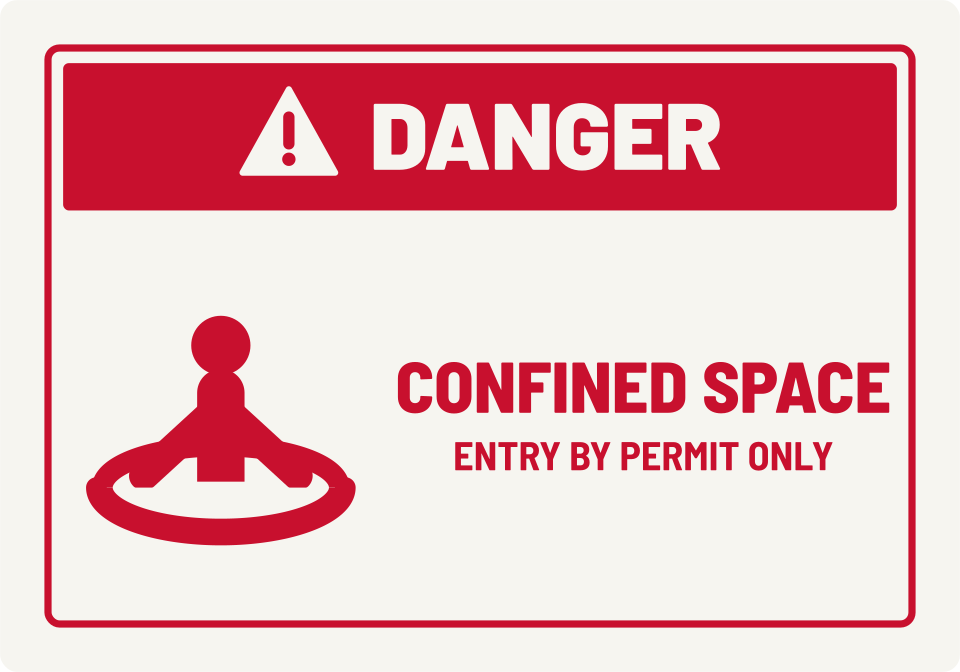
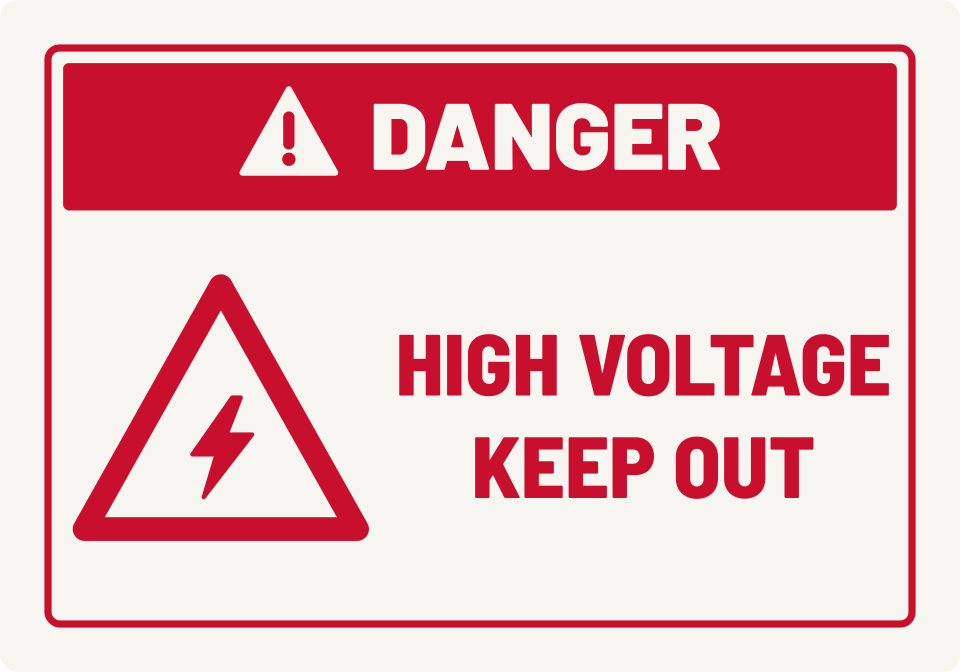
- DANGER (red): a hazardous situation that will result in death or serious injury if not avoided.
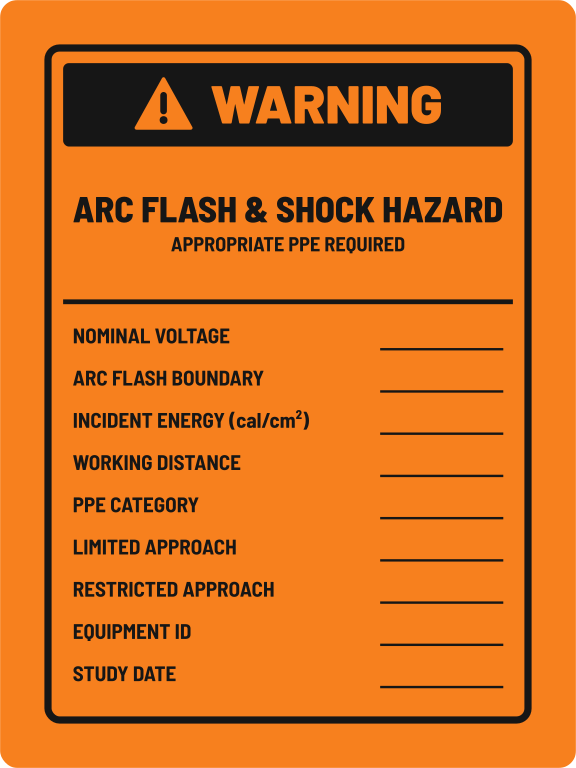
- WARNING (orange): a hazardous situation that could result in death or serious injury if not avoided.
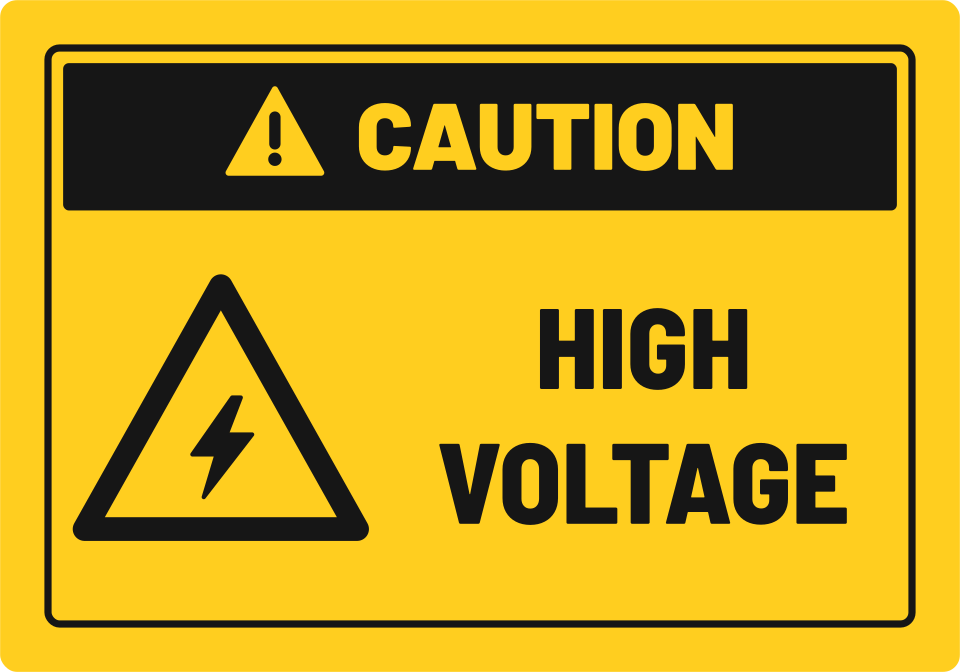
- CAUTION (yellow): a hazardous situation that could result in minor or moderate injury if not avoided.
- NOTICE (blue): information that isn't about personal injury, such as property damage or site rules.
- SAFETY INSTRUCTIONS (green): procedures, safe practices and the locations of safety equipment.
DANGER, WARNING and CAUTION normally carry the safety alert symbol, the triangle with the exclamation mark, in front of the signal word. NOTICE does not, because it isn't warning about injury.
Danger vs warning vs caution: side by side
| Signal word | Header colour | Severity | Likelihood | Typical uses |
|---|---|---|---|---|
| DANGER | Red, white letters | Death or serious injury | Will happen | Exposed high voltage, confined space entry, arc flash at open gear |
| WARNING | Orange, black letters | Death or serious injury | Could happen | Arc flash labels, shock hazard on covered equipment, moving machinery |
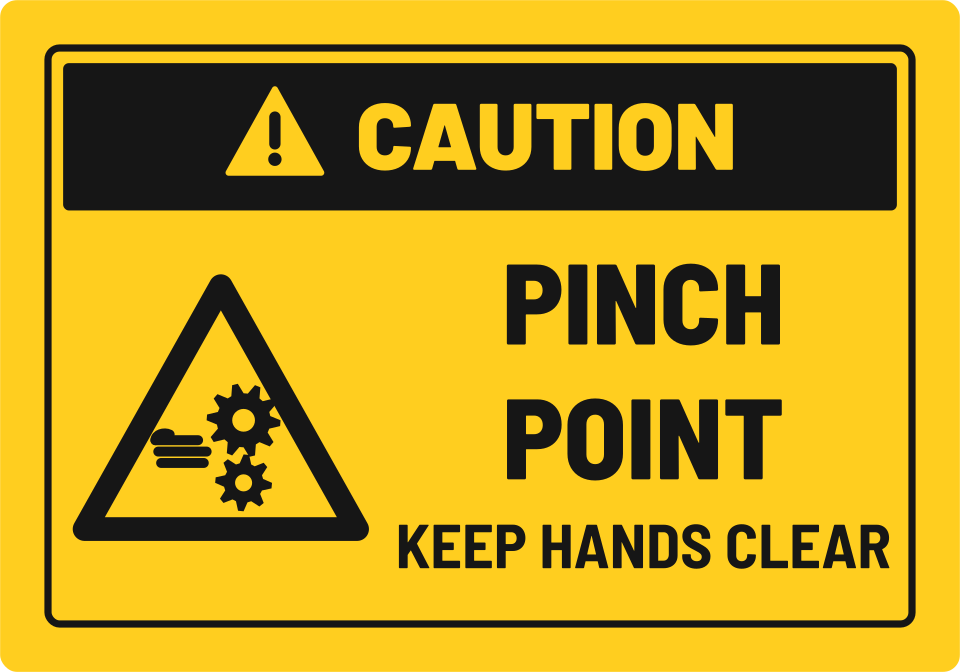
| CAUTION | Yellow, black letters | Minor or moderate injury | Could happen | Hot surfaces, pinch points, forklift traffic, PPE areas |
| NOTICE | Blue, white letters | No personal injury | n/a | Authorized personnel only, keep clear, equipment rules |
| SAFETY INSTRUCTIONS | Green, white letters | n/a | n/a | First aid, eyewash, emergency procedures |
The difference between caution and warning
This is the one people mix up most. Both describe hazards that could hurt you. The line between them is how badly. If the worst realistic outcome is a burn you'd treat on site or a pinched finger, it's CAUTION. If the worst realistic outcome is a hospital stay or a funeral, it's WARNING.
The difference between danger and warning
Both cover death or serious injury. DANGER is reserved for situations where the injury is basically certain if someone makes contact or ignores the sign. Exposed energized conductors behind an open door are DANGER. A closed panel that could expose someone to an arc flash during work is usually WARNING. Keep DANGER for the worst hazards on site. If every sign says DANGER, nobody reads any of them.
What does a caution sign mean?
A caution sign means: there's something here that can hurt you, but it's not likely to kill you. Pay attention and follow the instruction on the sign.
Caution signs are the most common signs in most facilities because most hazards fall in that middle range. Hot pipes, low clearances, pinch points on conveyors, areas where hard hats or safety glasses are required. On a two-colour engraved sign, caution is usually yellow with black letters, which is also one of the most readable colour pairs you can put on a wall.
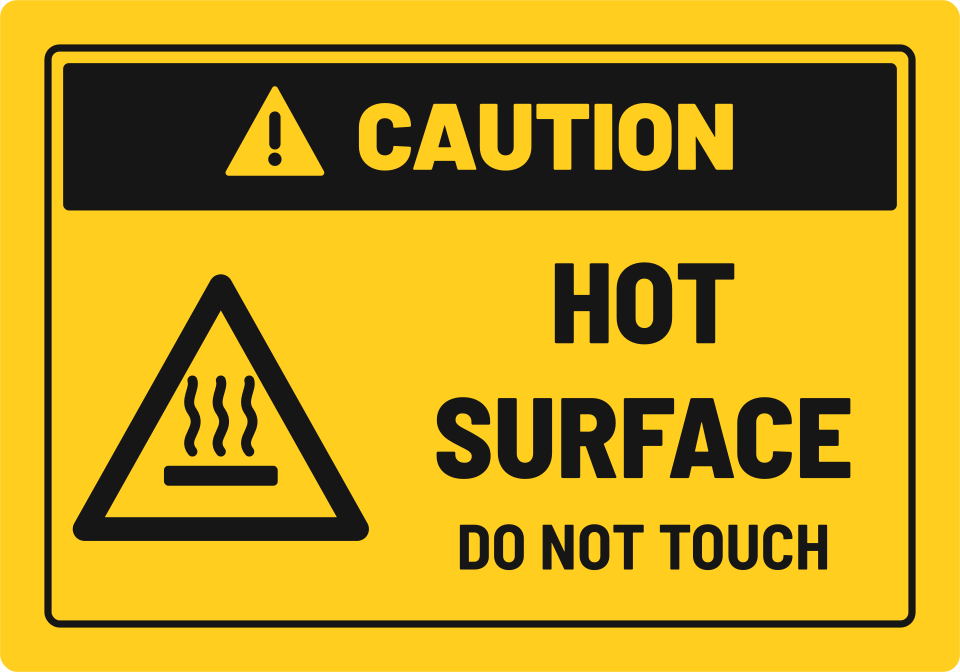
Browse the full set on our caution signs page, or compare with warning signs and danger signs.
Where CSA Z321 fits in Canada
ANSI Z535 is American. The Canadian standard for workplace safety signs is CSA Z321, Signs and Symbols for the Workplace. It lines up closely with the international approach in ISO 3864 and ISO 7010: it leans on symbols, geometric shapes and safety colours rather than on written signal words.
- A yellow triangle with a black border means a hazard or warning.
- A red circle with a slash means something is prohibited.
- A blue circle means a mandatory action, like wearing hearing protection.
- A green square or rectangle marks a safe condition or safety equipment.
In practice, a lot of Canadian sites use both systems on the same sign: an ANSI-style signal word header with a CSA or ISO-style pictogram underneath. Equipment built for the North American market often ships with ANSI-style signs already on it, so matching that style in the rest of the building keeps things consistent.
How to choose the right signal word
Ask these questions in order:
- Can this hazard kill or seriously injure someone? If no, go to question 3.
- If someone ignores the sign, is serious injury basically certain? Yes means DANGER. No means WARNING.
- Can it cause a minor or moderate injury? Yes means CAUTION.
- Is it about equipment, property, access or a site rule? Use NOTICE.
- Is it pointing people to safety gear or telling them a procedure? Use a green safety instruction sign.
Then write the message. Keep it short and specific: name the hazard, say what happens, say what to do. "HIGH VOLTAGE. KEEP OUT." beats a paragraph. A pictogram helps anyone who reads English as a second language, or who's reading from across the room.
Why engrave them instead of printing
Signal words only work if the sign is still readable in five years. Printed vinyl scuffs, fades and peels, especially near heat, oil or cleaning chemicals. An engraved lamacoid cuts the letters through the top colour layer into the contrasting core, so there's no ink to wear off. Mounted with screws or rivets, it stays put too.
If you want the background on the material itself, the main Llamacoids site covers engraved lamacoids and electrical ID tags in general. For safety signs specifically, you can mock one up in the sign builder, or pick a ready-made one in the shop and check out online. We're in Burlington and most jobs go out same day. Call 289-275-9572 if it's easier to talk it through.
FAQ
Frequently asked questions
What is the difference between a danger sign and a warning sign?
Under ANSI Z535, DANGER is for a hazard that will cause death or serious injury if it is not avoided. WARNING is for a hazard that could cause death or serious injury. The difference is certainty: danger means it will happen, warning means it could.
What does a caution sign mean?
A CAUTION sign marks a hazard that could cause minor or moderate injury if it is not avoided. Think hot surfaces, pinch points, or forklift traffic. It uses a yellow signal word panel with black letters.
Is ANSI Z535 required in Canada?
ANSI Z535 is an American standard, but its signal word system is widely used in Canadian workplaces and on equipment. The Canadian standard for workplace signs is CSA Z321, which leans on symbols, shapes and colours. Check your provincial regulations and your employer or AHJ requirements for what applies to your site.
When should I use a NOTICE sign instead of CAUTION?
Use NOTICE for information that is not about personal injury, such as property damage, equipment rules or access policies. CAUTION is for hazards that can hurt someone.