PPE signs: choosing the signal word, placement and layout
A plain guide to PPE signs for Ontario workplaces: hard hat, eye and hearing protection signs, CAUTION vs NOTICE vs ISO 7010, placement and combined plates.
PPE signs are the ones people walk past most. They're also the ones that decide whether a visitor, a new hire or a contractor puts on glasses before they step onto the floor. A good PPE sign is quick to read, posted before the hazard, and consistent across the building.
Here's how to choose the format, what to put on it and where it goes.
CAUTION, NOTICE or an ISO blue circle?
There are three common ways to build a PPE sign in Canada. All three show up on real sites.
| Format | What it looks like | Notes |
|---|---|---|
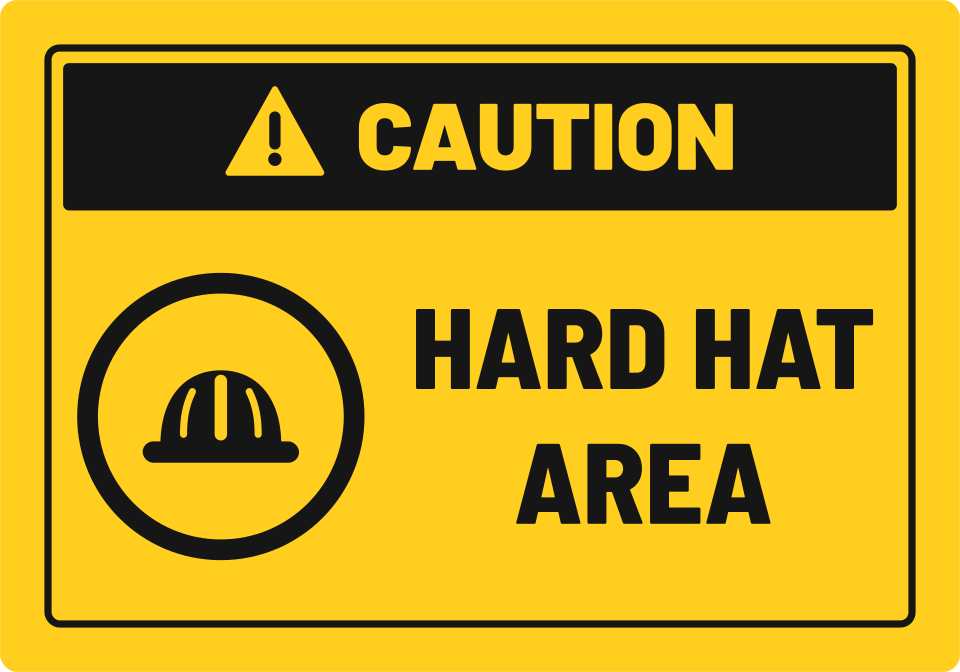
| CAUTION header (ANSI Z535.2 style) | Yellow header, black text, pictogram and message below | Treats the PPE requirement as protection against an injury hazard. Easy to justify. |
| NOTICE header | Blue header, white italic text | Very common, but ANSI reserves NOTICE for messages not related to personal injury. Fine if your site already uses it everywhere. |
| ISO 7010 mandatory sign | Solid blue circle with a white pictogram | Language-independent. Lines up with CSA Z321 and ISO 3864 colour conventions. Great for multilingual workforces. |
Our take: the format matters less than consistency. If half your doors say CAUTION HARD HAT AREA and the other half say NOTICE HARD HATS REQUIRED, people stop reading them. Pick one and roll it out everywhere. For more on what each signal word means, see Danger vs warning vs caution signs, and for the colours, safety sign colours in Canada.
The PPE signs most sites need
Hard hat signs
Anywhere there's overhead work, cranes, racking or a risk of falling objects. "HARD HAT AREA" and "HARD HATS REQUIRED BEYOND THIS POINT" are the usual wordings.
Eye protection signs
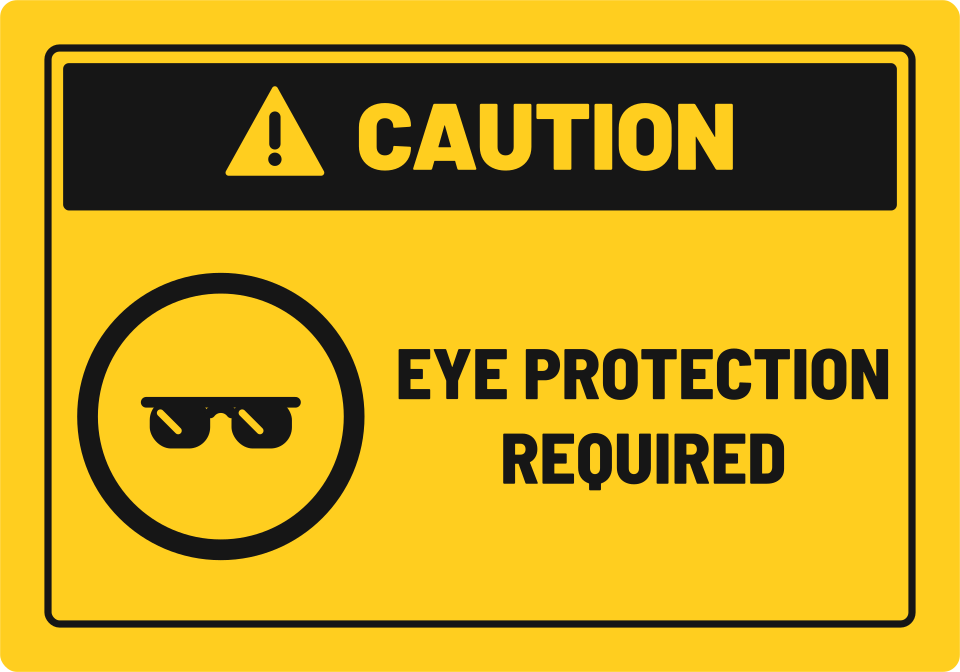
Machine shops, grinding and cutting areas, chemical handling, labs and most production floors. "EYE PROTECTION REQUIRED" or "SAFETY GLASSES REQUIRED" are clear and short.
Hearing protection signs
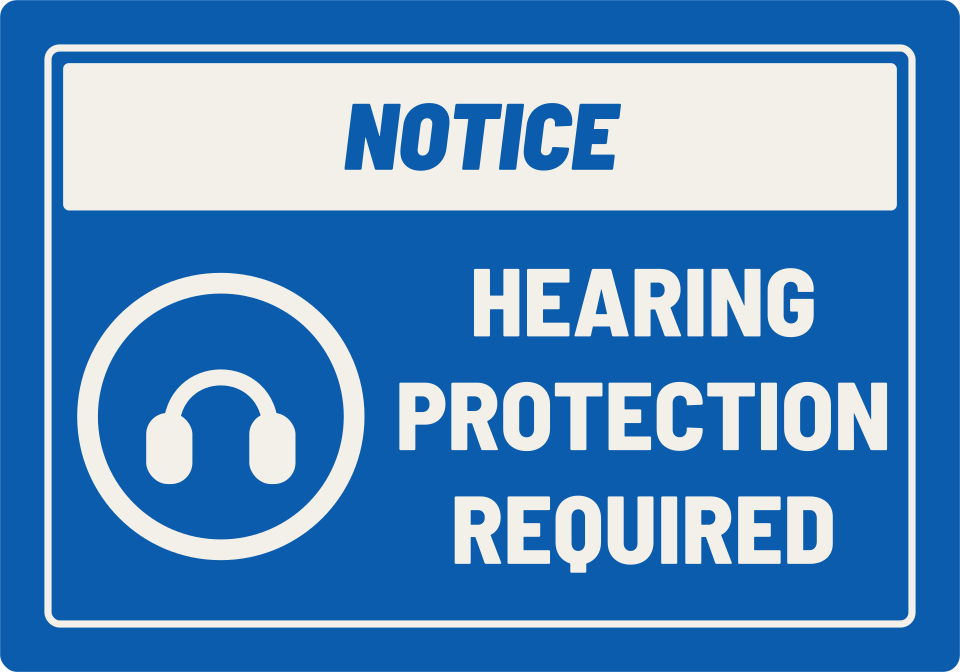
Noisy areas like compressor rooms, press lines, generator rooms and fabrication shops. "HEARING PROTECTION REQUIRED" or "HIGH NOISE AREA" are common. Some sites add the measured level from their noise survey.
Others worth having
- Safety footwear required
- Gloves required
- Face shield required (grinding, chemical transfer)
- Respirator required (spray booths, specific chemical areas)
- High-visibility vest required (yards, loading docks, forklift zones)
What Ontario rules say
In Ontario, the Occupational Health and Safety Act and its regulations set out when workers must wear protective equipment. For factories, warehouses and shops, O. Reg. 851 (Industrial Establishments) covers requirements like head and eye protection. Noise exposure is covered by its own regulation, O. Reg. 381/15 (Noise).
These regulations focus on when PPE must be worn and provided. They don't hand you a sign template. Signs are how most employers communicate the rule to everyone who walks in, including visitors and contractors who haven't been through your orientation.
Placement: before the hazard, not beside it
The most common PPE sign mistake is putting it inside the area. By the time someone reads it, they've already walked in without glasses on.
- Post at every entrance to the area, including the side door everyone actually uses.
- Eye level, roughly 1.5 m to centre, on the approach side.
- On floor-marked zones without a door, use a post or overhead hanging sign at the boundary line.
- Put the PPE station nearby. A sign that says "SAFETY GLASSES REQUIRED" next to a dispenser of glasses gets followed. One with no glasses in sight gets ignored.
Combining several PPE on one plate
At a plant entrance you often need three or four PPE requirements at once. One combined plate is cleaner than four separate signs stacked on a door.
- Two to four symbols reads well. Beyond four, the pictograms get too small to recognize at a distance.
- Short labels under each symbol: HARD HAT, SAFETY GLASSES, HEARING PROTECTION, SAFETY BOOTS.
- One header for the whole plate, such as "CAUTION / PPE REQUIRED BEYOND THIS POINT."
- Go bigger than a single-message sign so each symbol stays readable.
You can lay one out yourself in the sign builder and send it over, or tell us what you need and we'll set it up.
Size it for the distance
A PPE sign has to be read from where people make the decision, which is usually a few steps before the door or boundary line. A small plate that works on a machine guard gets lost on a warehouse wall.
- Doors and personnel entrances: a mid-size plate at eye level is usually enough, since people pass within arm's length.
- Overhead doors, aisles and yard boundaries: go larger. People approach from farther away, often on a forklift.
- Machine-specific PPE: a smaller plate on the machine itself, in addition to the area sign, works for things like a face shield at a grinder.
If you're not sure, send us a photo of the spot and how far away people will be when they need to read it. We'll suggest a size.
Why engraved PPE signs
PPE signs live on doors, beside forklifts and near grinders. They get bumped, splashed and cleaned. Printed signs scuff and fade. An engraved lamacoid has the text and symbols cut through the top colour into the core, so the message is part of the plate and doesn't wear off with cleaning.
Browse ready-made layouts on the PPE signs and caution signs pages, or order ready-made plates from the shop. We engrave them in Burlington with same-day turnaround on most orders. For equipment tags and machine nameplates, see llamacoids.ca.
Build your sign and order online or call 289-275-9572.
FAQ
Frequently asked questions
Should a PPE sign use CAUTION or NOTICE?
Both are common. Under a strict reading of ANSI Z535.2, NOTICE is meant for messages not related to personal injury, so CAUTION or an ISO 7010 blue mandatory symbol is the more defensible choice for PPE. Many sites still use NOTICE for PPE. The most important thing is to pick one scheme and use it consistently.
Where should PPE signs be posted?
At every entrance to the area where the PPE is required, at eye level, positioned so people see them before they cross into the area. Posting them only inside the area is too late.
Can one sign show several PPE requirements?
Yes. A combined plate with two to four symbols, such as hard hat, safety glasses and hearing protection, is common at plant and shop entrances. More than four starts to get hard to read from a distance.
Are PPE signs required by law in Ontario?
The Occupational Health and Safety Act and regulations such as O. Reg. 851 (Industrial Establishments) set out when protective equipment must be worn. Signs are a common way to communicate those requirements. Check the current regulations and your site program for what applies to you.