Safety signs and symbols: a Canadian reference chart
What each safety symbol shape and colour means under CSA Z321 and ISO 3864: prohibition, warning, mandatory, safe condition and fire equipment.
A safety symbol has to work in about a quarter of a second, from an angle, in bad light, for someone who may not read English. That is a demanding brief, and it is why the symbol system is built on geometry and colour rather than on pictures alone. Before anyone identifies the pictogram inside, the shape and the colour have already said what kind of message it is.
This is a reference for the whole system as it applies in Canada: the five symbol categories, what each shape and colour means, the pictograms you will actually see on a Canadian site, and how the symbol relates to the signal word printed above it.
The five categories
The international standard is ISO 3864, and the Canadian workplace standard CSA Z321, Signs and Symbols for the Workplace, follows it. Between them they define five symbol categories. Each gets its own shape and its own colour, so the meaning is encoded twice.
| Category | Shape | Colour | Means | Examples |
|---|---|---|---|---|
| Prohibition | Circle with diagonal bar | Red on white | Do not do this | No smoking, no entry, no open flames |
| Mandatory action | Solid circle | White on blue | You must do this | Eye protection, hard hat, hearing protection |
| Warning | Equilateral triangle | Black on yellow | Hazard, take care | Electrical, hot surface, pinch point, forklift |
| Safe condition | Square or rectangle | White on green | Safety here | Exit, first aid, eyewash, AED |
| Fire equipment | Square or rectangle | White on red | Firefighting equipment | Extinguisher, hose reel, alarm point |
Why shape carries the load
Roughly one in twelve men has some degree of colour vision deficiency, most commonly red-green. A system that relied on colour alone would fail for them, and would fail for everyone under sodium lighting, in smoke, or at a glancing angle. The shape is the redundancy. A triangle means hazard even in monochrome.
The pictograms you will actually see
Electrical
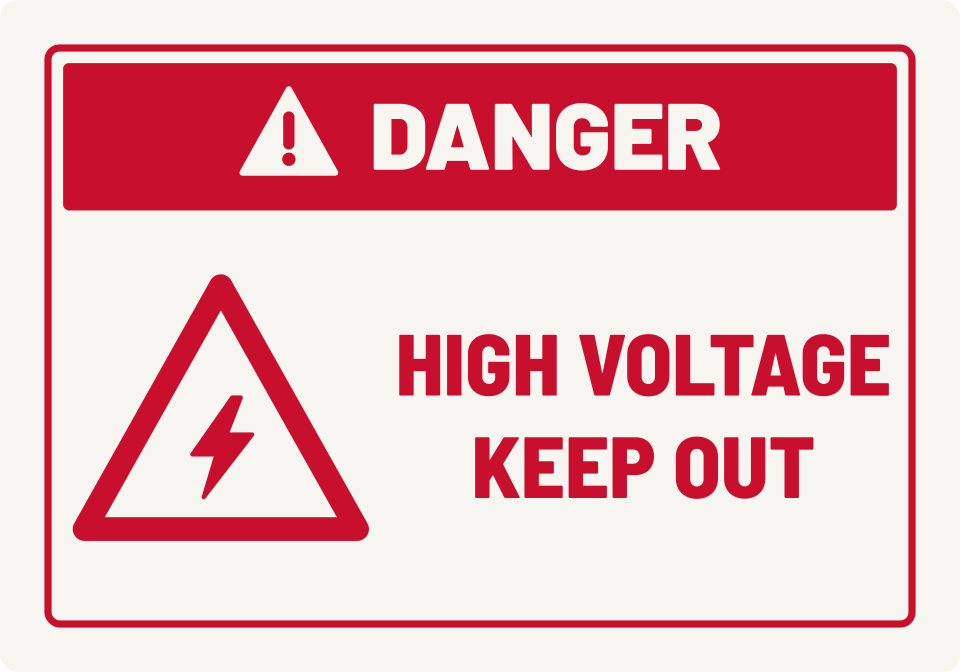
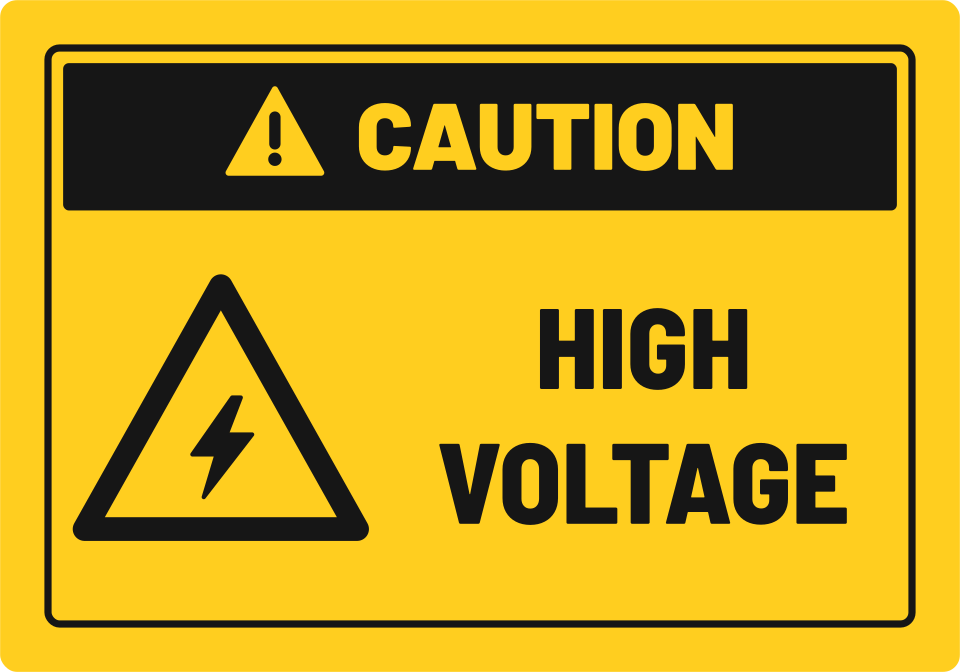
The lightning bolt in a yellow triangle is the universal electrical hazard symbol, and it is on more Canadian signage than any other pictogram. It appears on panel covers, switchgear, transformers, high voltage enclosures and arc flash labels. It says there is electrical energy here; the text has to supply the voltage and the specific instruction. See high voltage signs and arc flash labels.
Mechanical
Rollers for a nip point, a hand entering a gap for a pinch point, a wavy-line surface for heat, a gear for moving machinery. These belong at the hazard on the machine, not at the cell entrance. See machine safety signs.
PPE
Always the solid blue circle, always a head or body part wearing the equipment: glasses over eyes, a helmet on a head, muffs over ears, a mask over a face. Blue means mandatory, which is what separates a PPE sign from a warning sign. See PPE signs and our PPE sign guide.
Prohibition
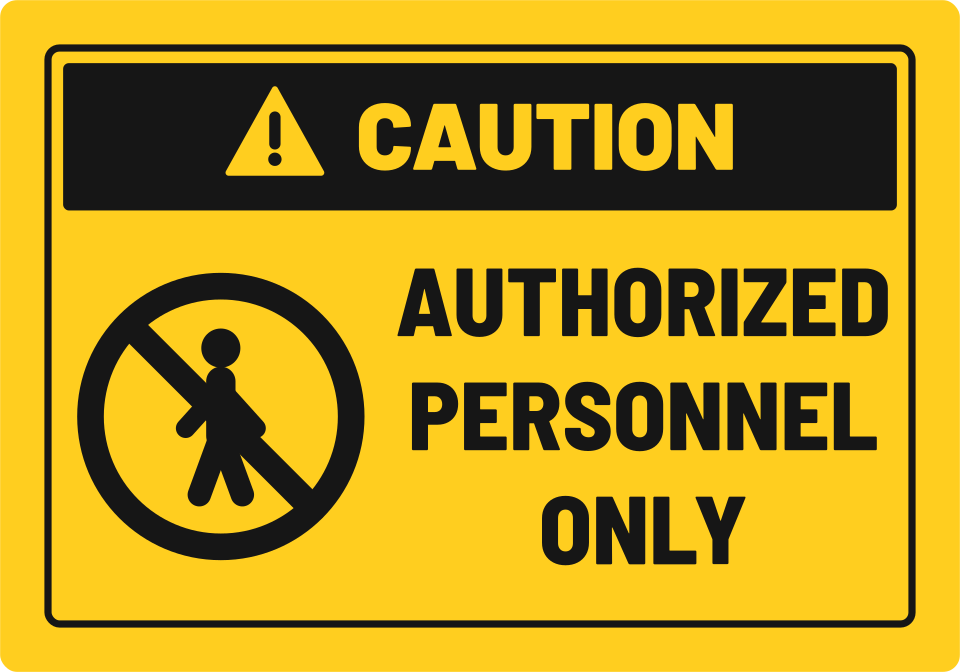
The red circle and bar over whatever is not allowed. A lit cigarette for no smoking, a walking figure for no entry, a flame for no open flames. The bar runs lower-left to upper-right at 45 degrees, and the symbol underneath stays black rather than red.
Safe condition and fire
A running figure and an arrow for exits, a white cross for first aid, an eye under a water stream for eyewash, a heart with a bolt for AED. In red: the extinguisher outline, the hose reel, the alarm call point. These are the signs people look for when something has already gone wrong, so findability beats subtlety.
How symbols and signal words fit together
Here is where two systems meet, and where most of the confusion on Canadian sites comes from.
The ISO system, followed by CSA Z321, is symbol-led: the pictogram carries the meaning and text is supporting. The American ANSI Z535 system is word-led: a coloured header panel reading DANGER, WARNING, CAUTION or NOTICE, with the symbol and text below it.
Canadian workplaces use both, often in the same building, and that is fine. What is not fine is mixing the severity logic. If you are using ANSI headers, keep the severity ladder honest:
| Header | Severity | Header colour |
|---|---|---|
| DANGER | Will cause death or serious injury | Red / white |
| WARNING | Could cause death or serious injury | Orange / black |
| CAUTION | Could cause minor or moderate injury | Yellow / black |
| NOTICE | A rule or practice, not a physical hazard | Blue / white |
The detail on choosing between them is in danger vs warning vs caution signs, and the full colour breakdown is in safety sign colours in Canada.
What happens when you engrave a symbol
A printed sign can hold any number of colours, so a printed pictogram can be as detailed as the artwork. An engraved plate works differently: it is two-ply phenolic, one colour on the surface and a contrasting core beneath, and the cutter exposes the core. You get two colours, and the symbol has to be drawn for that.
In practice this is a constraint worth having. It forces bold outlines and solid shapes, which is exactly what reads at distance. The pictograms on this site are drawn as true two-colour plates for that reason, and you can see how any of them cut by opening the sign library. Where a standard sets a specific colour pair, we cut that pair rather than approximating it.
The trade-off is that a photographic or many-coloured symbol cannot be engraved as-is and has to be redrawn. Send us the artwork and we will tell you honestly whether it will hold up at the size you need.
Using this on your own site
Symbols make a building readable to people who have never been in it: contractors, new hires, inspectors, emergency responders. Two rules carry most of the value. Use the right category shape for the kind of message, and use the same symbol for the same hazard everywhere on site. A pinch point symbol that changes between two machine cells is teaching people that the symbols do not mean anything specific.
Ready-made designs are on the caution, danger and warning pages, or build your own wording around a symbol in the sign builder. Everything is engraved in Burlington, Ontario and most orders ship the same day. For panel tags, valve tags and equipment nameplates, the main Llamacoids site has the rest of the range. Call 289-275-9572 or send your list and we will quote it.
FAQ
Frequently asked questions
What are the five categories of safety symbols?
Under ISO 3864, which CSA Z321 follows: prohibition (red circle with a diagonal bar), mandatory action (solid blue circle), warning (yellow triangle with a black border), safe condition (green square) and fire equipment (red square). The shape and colour carry the meaning before the symbol inside is even read.
What is the difference between a safety sign and a safety symbol?
The symbol is the pictogram — the flame, the bolt, the hard hat. The sign is the finished plate, which usually combines the symbol with a signal word and text. Symbols work across languages and at a distance; text carries the specific instruction. Most good signs use both.
Why is a warning symbol a triangle?
Because shape is readable when colour is not. A viewer with colour vision deficiency, or anyone seeing the sign in poor light or from an angle, still reads the triangle as a hazard. ISO 3864 assigns a distinct geometric shape to each meaning for exactly that reason, so the shape and the colour say the same thing twice.
Do Canadian safety symbols differ from American ones?
The symbols are largely shared, since both draw on ISO pictograms. The difference is in the sign format around them: Canadian workplace signage references CSA Z321, aligned with ISO 3864, while the DANGER, WARNING, CAUTION and NOTICE header format common on Canadian sites comes from the American ANSI Z535 system. Most Canadian workplaces use a mix, and both are accepted.