Safety signs in the workplace: what goes where
A room-by-room guide to workplace safety signs: which sign each area needs, where to mount it, and how to sign a whole building consistently.
Most workplaces do not have a sign problem. They have a placement problem. The signs exist, they were bought in a batch years ago, and they are mounted where there happened to be a flat surface rather than where the decision gets made. Someone walks into the area, gets three steps in, and then sees the sign telling them what they should have been wearing.
This is a guide to getting that right: which sign each part of a building needs, where on the wall or equipment it belongs, and how to keep the wording consistent so people learn the system instead of re-reading it every time.
The one principle that decides everything
A safety sign has to reach someone before they are exposed to the hazard, and at the moment they make the decision. Everything else follows from that.
It means a hearing protection sign goes on the door, not on the far wall. It means an arc flash label goes on the panel cover the electrician opens, not on the room door. It means a pinch point sign goes on the guard, six inches from the nip point, where a hand would be. When you are deciding where a sign goes, walk the route someone takes and put the sign at the last point where they could still change their mind.
Area by area
Entrances and reception
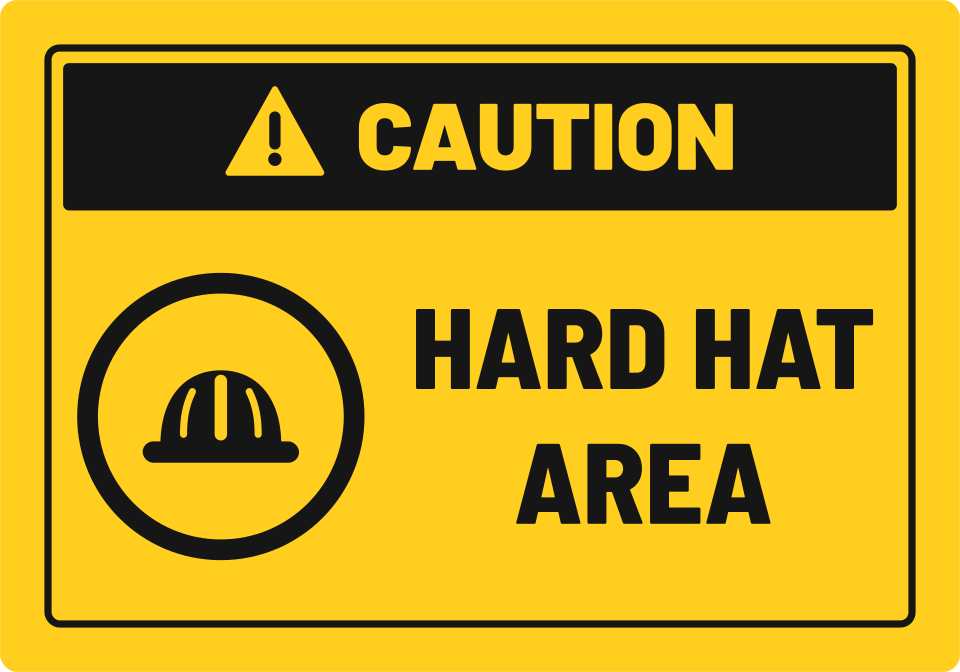
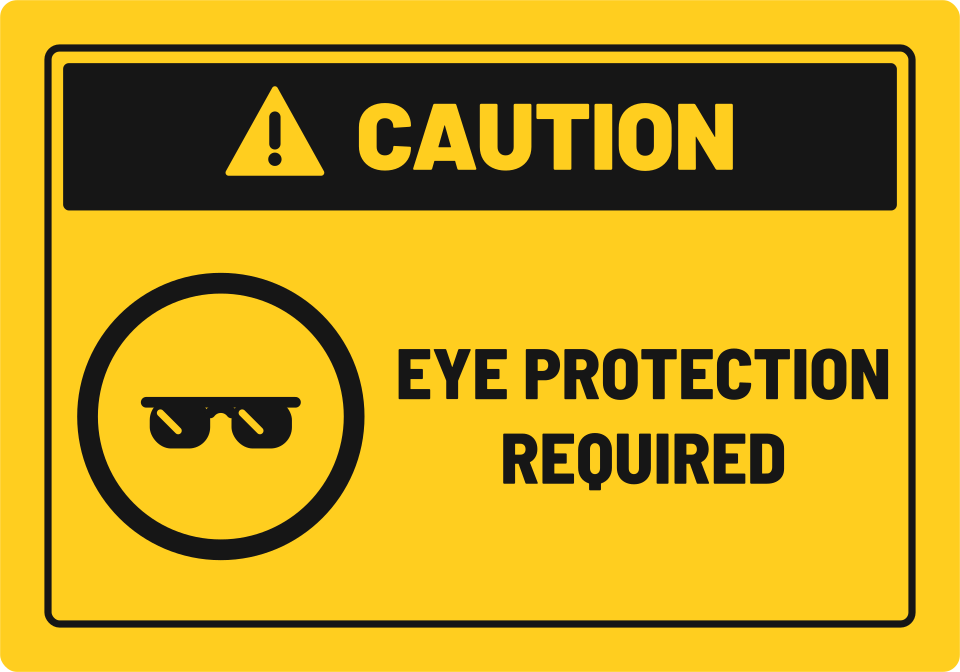
The site-wide rules go here: mandatory PPE for the areas beyond, visitor sign-in requirements, and where to report. Blue and white for anything mandatory. If the whole plant is a hard hat and safety glasses site, this is where that is stated, and it should be repeated at each area entrance rather than relied on once.
Electrical rooms and panel areas
The most heavily regulated signage in most buildings. On the room door: authorized personnel only, and the electrical hazard warning. On the equipment itself: the voltage, the arc flash label, and any dual-supply warning where a second source of power exists.
Voltage plates matter more than people expect. An electrician approaching a panel should know whether it is 120/208 or 600 V before opening it, because it changes the PPE. See electrical room signs and high voltage signs, and our guide to what belongs on an electrical room door.
Production and machine areas
Hazard signs go on the machine, not the aisle. Pinch points, hot surfaces, moving machinery, automatic start warnings and lockout points each get a plate at the hazard. At the cell entrance, a PPE sign covering what the area requires.
This is the environment where printed signs fail fastest. Oil, coolant, degreaser and daily wipe-downs take ink off film within a season. See machine safety signs.
Warehouse and shipping
Forklift traffic warnings at every pedestrian and vehicle crossing, in both directions. High-visibility clothing requirements at the door. Racking load limits where they apply. Keep-clear markings at electrical panels and fire equipment, because in a warehouse those are the first things to get boxed in.
Mechanical rooms, tanks and pits
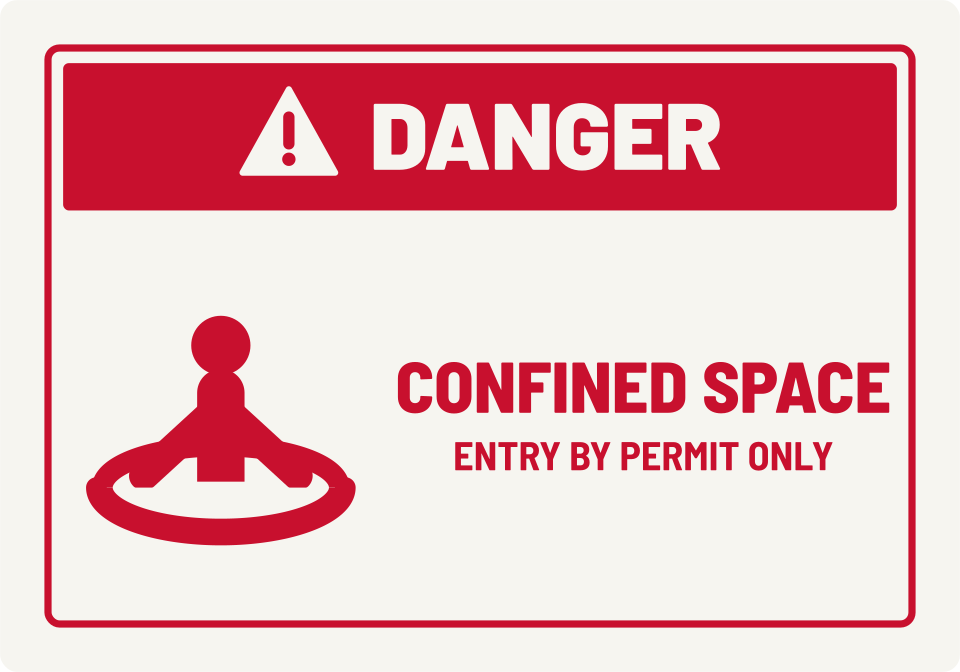
Confined space signs on every entry point that qualifies, including the ones nobody thinks of as a confined space: sumps, vaults, silos, large ducts. The sign belongs on the hatch or cover itself. See confined space signs and our Ontario confined space guide.
Chemical storage
No smoking and no open flames at the door where flammables are stored, eyewash and shower location signs where they apply, and PPE requirements for handling. Signs here are permanent infrastructure, unlike the WHMIS labels on the containers, which change with the stock.
Exits, fire equipment and first aid
Green for safe conditions and equipment: exits, first aid stations, eyewash, AED. Red for fire equipment: extinguishers, hose cabinets, alarm pull stations. The point of these is being findable in a hurry by someone who has never looked for them before, which means mounted high enough to be seen over racking and equipment. See fire safety signs and first aid signs.
Getting the signal word right
The header on the sign is not decoration. It tells someone how bad the consequence is, and using the wrong one erodes every other sign on site.
| Header | Use it when | Colour |
|---|---|---|
| DANGER | The hazard will cause death or serious injury if ignored | Red / white |
| WARNING | It could cause death or serious injury | Orange or red / white |
| CAUTION | It could cause minor or moderate injury | Yellow / black |
| NOTICE | It is a rule or practice, not a physical hazard | Blue / white |
If everything on your site says DANGER, nothing does. Full detail is in danger vs warning vs caution signs, and the colour logic is in safety sign colours in Canada.
Signing a whole building
Do it as one exercise rather than one sign at a time. The value is in consistency: the same phrasing, the same colour for the same meaning, the same plate size for the same class of sign. People stop reading signs individually once they have learned the system, and that is when signage starts actually working.
- Walk the site and list every hazard, area entrance and piece of emergency equipment.
- Assign a signal word to each one, using the table above.
- Write the wording and keep the word order identical across similar signs.
- Pick two or three sizes and use them consistently by class.
- Decide the mounting per sign: adhesive for clean indoor walls, drilled and screwed for equipment and anywhere wet, hot or solvent-exposed.
Why these are engraved
A printed sign is ink on film with adhesive behind it. In an office corridor that lasts for years. On a plant floor it is a consumable, and a faded sign is worse than no sign because it tells everyone the safety system is not maintained.
Every sign here is cut from two-ply phenolic: a coloured surface bonded to a contrasting core, with the lettering cut through the surface. There is no ink and nothing laminated on. That is also why engraved plates are what codes accept where the wording has to be permanent and legible.
Send a list of the signs your building needs and we will quote the batch, or mock one up in the sign builder and order online. We engrave in Burlington, Ontario, most orders ship the same day, and for panel tags and equipment ID the main Llamacoids site covers the rest. Call 289-275-9572 if it is easier to talk it through.
FAQ
Frequently asked questions
What safety signs are required in a workplace?
There is no single list that applies to every workplace. Requirements come from the hazards you actually have, your provincial occupational health and safety regulations, the Canadian Electrical Code for electrical equipment, and fire code requirements for exits and fire equipment. In practice most sites need PPE signs at area entrances, electrical hazard and arc flash signs at panels and switchgear, confined space signs on tanks and pits, machine hazard signs at guards, and fire and first aid equipment signs.
Where should safety signs be placed?
At the point of decision, before the hazard. A PPE sign belongs at the door people walk through, not in the middle of the area. A machine hazard sign belongs on the guard beside the nip point. An electrical warning belongs on the panel door. If someone can be exposed to the hazard before they see the sign, the sign is in the wrong place.
How high should a safety sign be mounted?
Roughly eye level, about 1.5 to 1.7 m to the centre of the sign, and unobstructed from the direction people approach. On equipment the sign goes on the hazard itself rather than at a standard height. What matters more than an exact number is that the sign is visible from where the decision is made and not blocked by racking, doors or piping.
Do workplace safety signs need to be bilingual?
It depends on your jurisdiction and your workforce. Quebec has French language requirements, and any site where part of the crew does not read English should consider bilingual wording or symbol-led signs. Symbols carry meaning across languages, which is part of why ISO 3864 and CSA Z321 are built around them.